Venstar Transfer Fees and Costs
Competitiveness on FXcompared for low value transfers e.g. sending GBP200
2/5
Competitiveness on FXcompared for medium value transfers e.g. sending GBP10,000
3/5
Competitiveness on FXcompared for high value transfers e.g. sending GBP250,000
1/5
Does FXcompared have direct access to the pricing
1/2
Is it possible to lock in future exchange rates
1/1
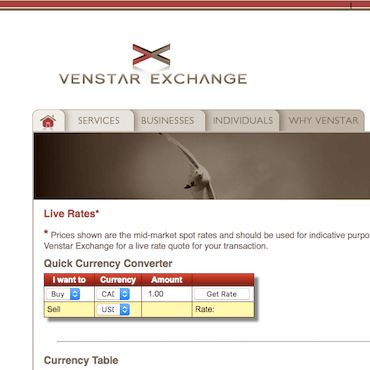
Venstar Exchange states that since it deals with a large volume of transactions, it remains closely tied to average market rates. It publishes these rates online, but these are not necessarily the rates that the client will receive for their transfer.
To find out the tariff for a specific transfer, the client will first need to enter the transaction data. Venstar Exchange typically sends a transfer rate by email within 10 minutes.
Venstar Exchange adheres to a simple payment structure. The client does not pay a transfer fee for transfers over $5,000. Venstar Exchange may accept scheduled transfers of less than $5,000, but a fee of $15 must be paid.
In addition, since the company only works with bank transfers, the client should be prepared for any fees that the bank charges for such transfers — usually from $10 to $30. The beneficiary’s bank may also charge a fee for receiving a transfer.
Minimum transfer amounts depend on the type of transfer. However, for one-time transfers, the client will need to send at least $5,000 — a high minimum for most daily transfers.
If a client sets up regular transfers using Venstar Exchange, it will be possible to transfer less than $5,000 each time. However, just like when viewing the exact exchange rate, the client will first need to enter their transaction data to find out how much they can send below $5,000.
Venstar Exchange handles all major currency pairs in both directions, in addition to select small and exotic currencies. To find out if Venstar Exchange supports the selected currency, it is recommended that the client contacts an exchange account specialist.
Venstar Exchange offers a number of tools to help the client send money abroad:
Spot orders — these are the typical remittances at today’s exchange rates, which are usually accepted within two business days.
Forward contracts — with a 10% deposit, a client can buy or sell currency at a fixed rate on a specific date in the future. Closed forward contracts require the client to specify a specific date for their transfer, while open forward contracts allow them to select a range of days.